Laminar and Turbulent combustion
Supersonic combustion
Biomass combustion
Numerical modeling
Combustion laser diagnostics and Optical measurement techniques
Energy systems
Propulsion systems
Gas turbine combustors
Biofuels
Clean energy
Research Lines
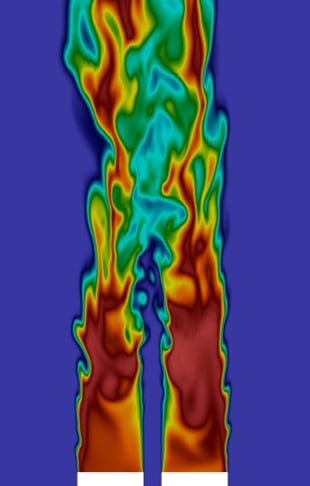
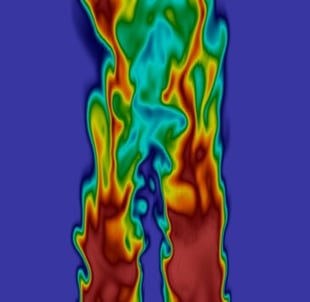
The main lines of research pursued by members of the Peru Section of The Combustion Institute (PSCI) include the following ones.
The FPCE (Flows, Particles, Combustion and Environment) research group is focused on the development of solutions that mitigate the impact of energy and combustion systems on health and the environment. It was founded in 2019 in the Pontificia Universidad Católica del Perú (PUCP) and since then has specialized in the numerical modeling of turbulent reacting flows. For further details, see the FPCE home page.
Combustion Labs and Research Groups
The Peru Section of The Combustion Institute (PSCI) is composed by members that belong to different combustion labs and research groups. Some of the these organizations are highlighted below.
FPCE


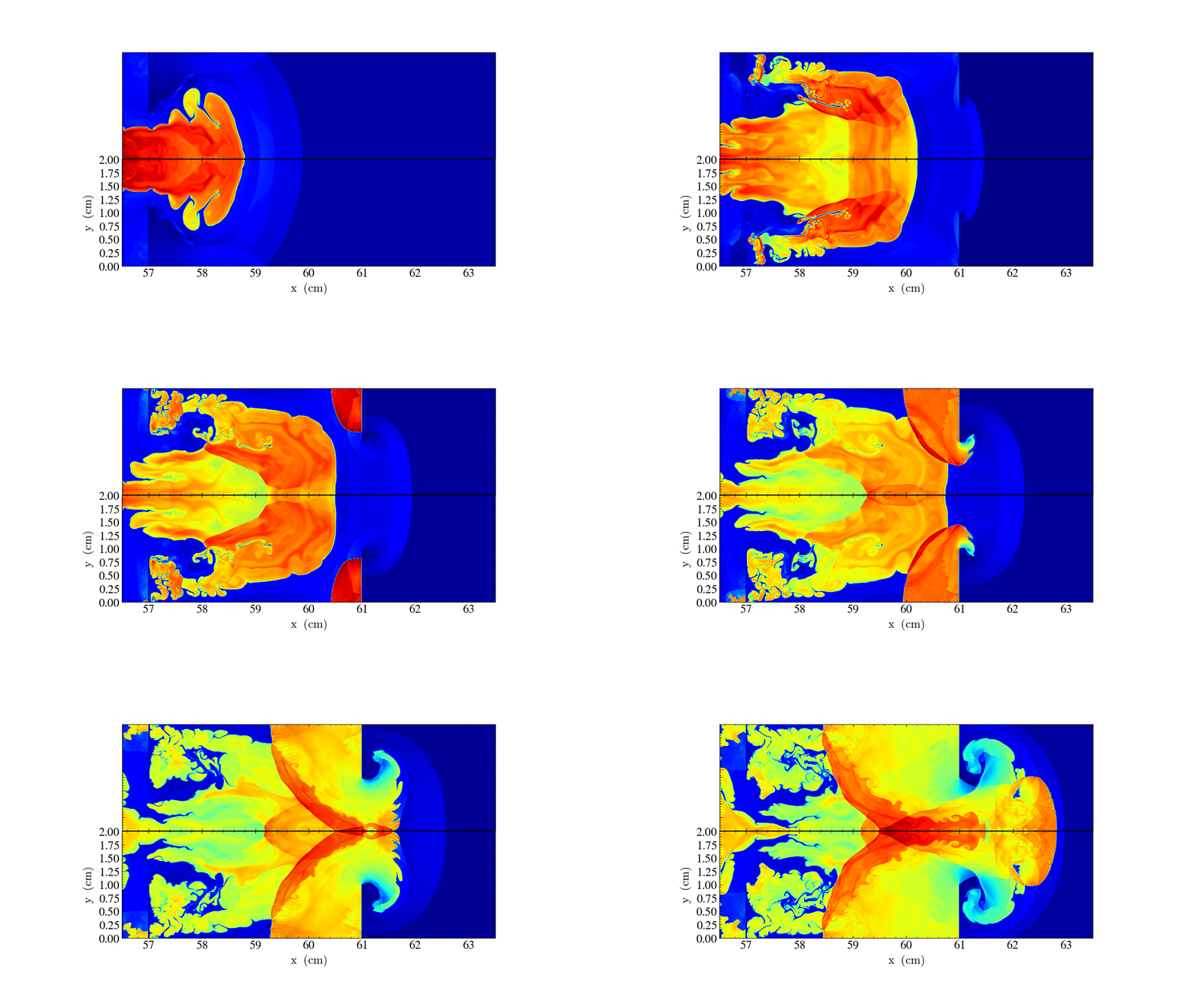
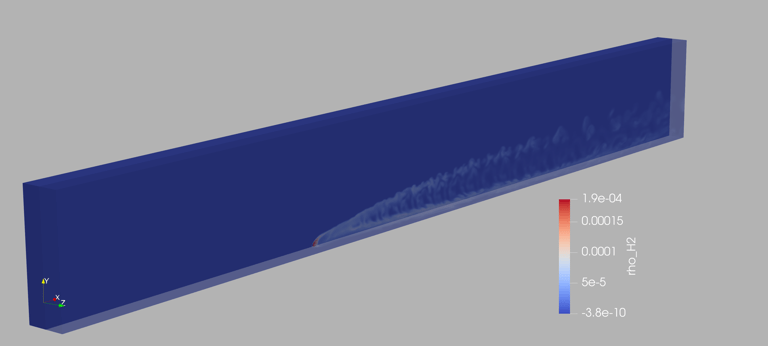
Experimental and numerical characterization of interactions between shock waves and turbulence in compressible fluid flows based on the use of optical measurement techniques and computational fluid dynamics For details, see the project home page.
Research Projects
Some of the research projects currently under development by members of the Peru Section of The Combustion Institute (PSCI) are the following.
STI Project
Illacanchi, F., Mendiburu, A., Bravo, L., Khare, P., Celis, C., 2025. “Distorted tulip flame: On the mechanisms controlling premixed flame acceleration in closed channels”. International Communications in Heat and Mass Transfer 169, Part D:109810. https://doi.org/10.1016/j.icheatmasstransfer.2025.109810.
Publications
Selected articles recently published by members of the Peru Section of The Combustion Institute (PSCI) are listed below.
2025
Mariños, D.J., Nzinga, M.A.K, Mariñes, L.M., Quispe, L., Paz, E., Celis, C., Mendiburu, A., 2025. “Effectiveness of perforated plate diameter on flame extinction of propane flames enriched with hydrogen and characterized by Lewis and Zeldovich numbers”. International Journal of Hydrogen Energy 160:150588. https://doi.org/10.1016/j.ijhydene.2025.150588.
Valencia, S., Mendiburu, A., Bravo, L., Khare, P., Celis, C., 2025. “Influence of Obstacle Separation Distance on the Acceleration of Premixed Methane/Air Flames in a Closed Channel”. Flow, Turbulence and Combustion. https://doi.org/10.1007/s10494-025-00691-2.